kate astrid

Helping developers build better products.

kate astrid

Talks

Given

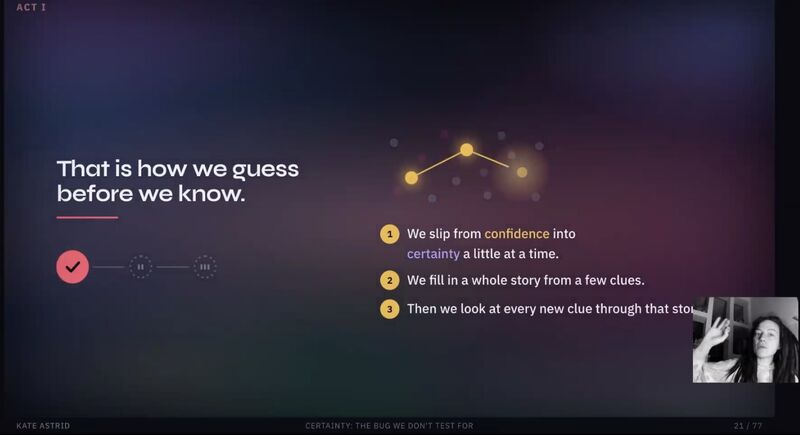
kate astrid presenting Certainty: The Bug We Don't Test For at XtremeJS

Certainty: The Bug We Don't Test For

XtremeJS · online

Software engineers are trained to find answers and reach a conclusion. This talk is about what happens when confidence becomes certainty, and certainty stops the questions.

Video

Given

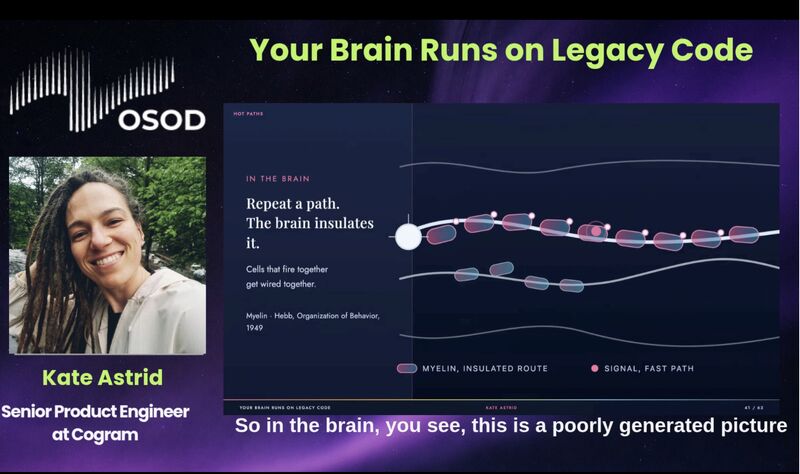
kate astrid presenting Your Brain Runs on Legacy Code at Open Source Observability Day

Your Brain Runs on Legacy Code

Open Source Observability Day · online

Software engineers know that every system carries the weight of past decisions. The human mind is no different. We all run beliefs, habits, and reactions that were written years ago, often for problems that no longer exist.

Hosted

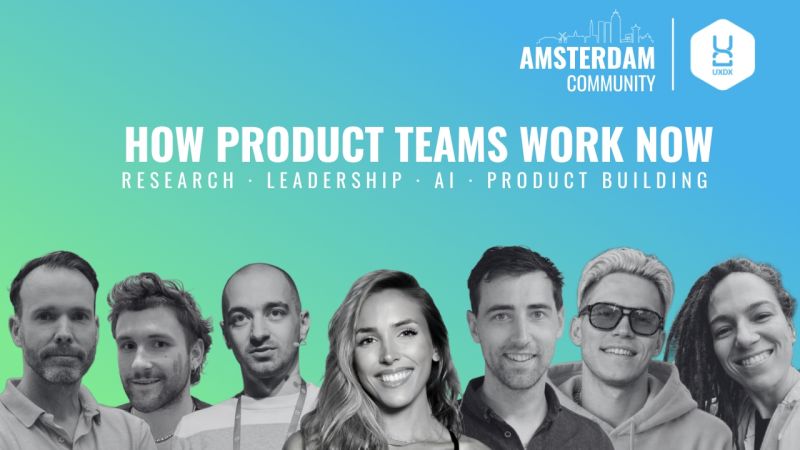
UXDX Amsterdam lineup, with kate astrid hosting

UXDX Amsterdam

Miro, Fred. Roeskestraat 100 · with Steven Roest

An afternoon of practical talks, debate, and hands-on learning for product teams, hosted with Steven Roest from ING.

Given

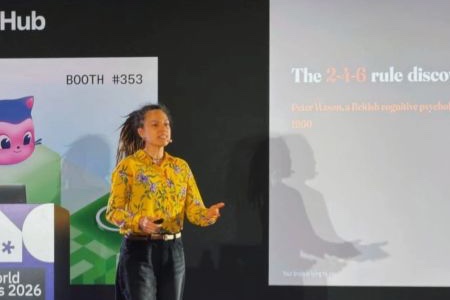
kate astrid on stage at WeAreDevelopers in San Jose

Your Brain Is Lying to You: Cognitive Biases in Development

WeAreDevelopers World Congress North America · San Jose

We like to think our decisions are logical, but they often are not. Cognitive biases can trick us into choosing the wrong solution, underestimating complexity, or overestimating our abilities.

Video

Given

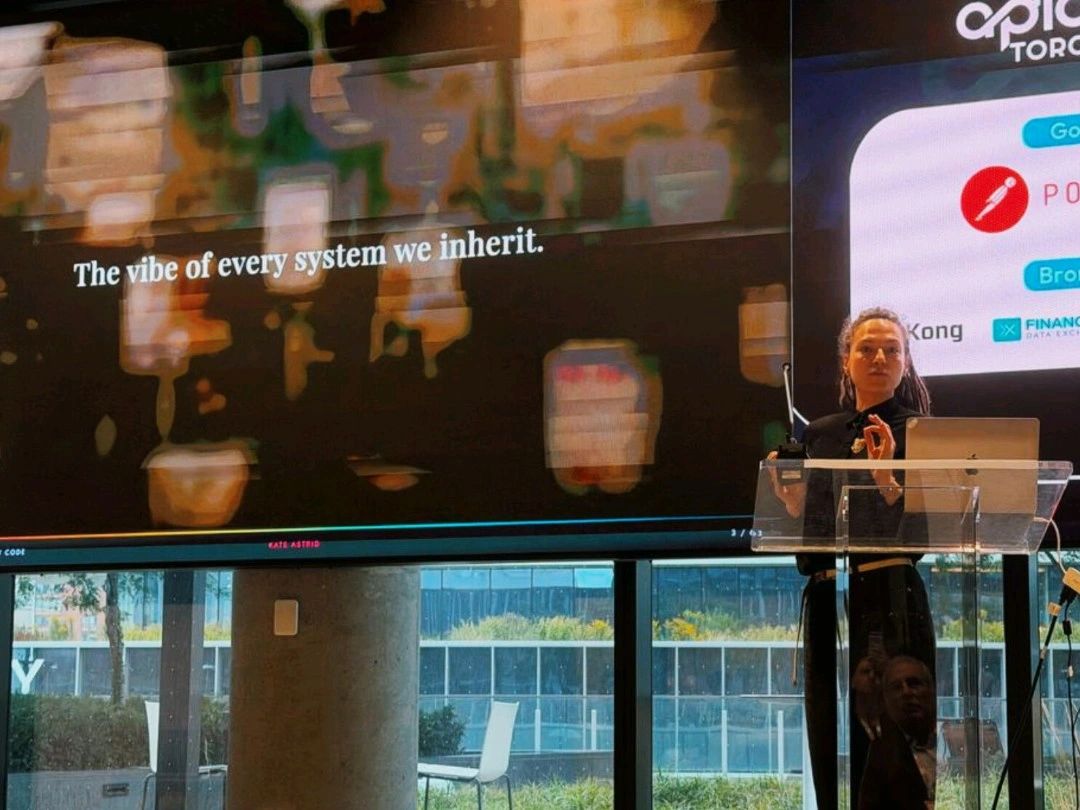
kate astrid giving Your Brain Runs on Legacy Code at apidays Toronto

Your Brain Runs on Legacy Code

apidays FOST Toronto

Software engineers know that every system carries the weight of past decisions. The human mind is no different. We all run beliefs, habits, and reactions that were written years ago, often for problems that no longer exist.

Video

Given

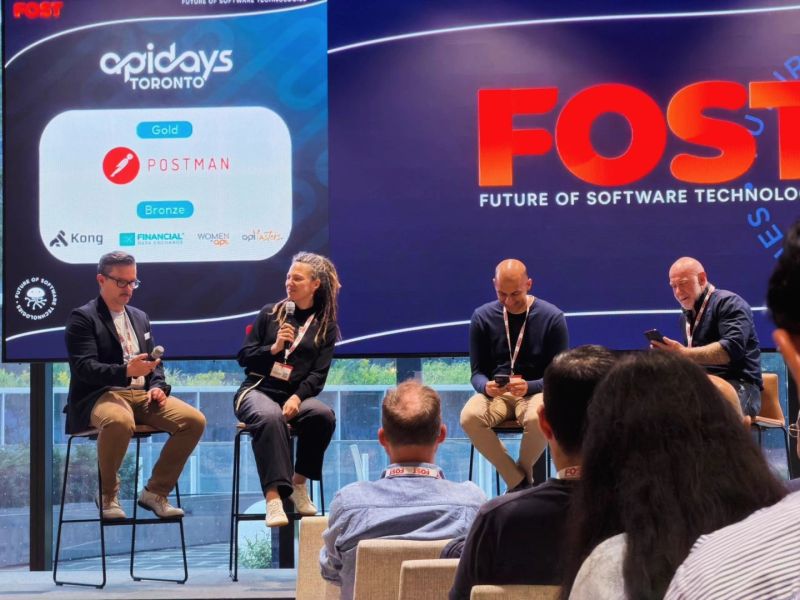
kate astrid speaking on the apidays FOST Toronto panel

What will API teams actually look like in 2027?

apidays FOST Toronto · panel with Greg, Vivek, and Mark

A conversation on where API strategy is heading: how far APIs and AI will converge, deterministic versus probabilistic approaches, and the skills teams will need.

Recap

Given

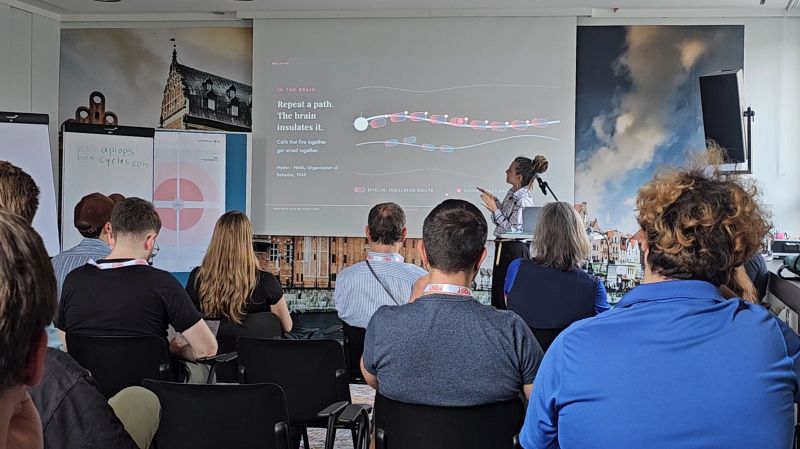
kate astrid giving Your Brain Runs on Legacy Code at apidays Munich

Your Brain Runs on Legacy Code

apidays FOST Munich

Software engineers know that every system carries the weight of past decisions. The human mind is no different. We all run beliefs, habits, and reactions that were written years ago, often for problems that no longer exist.

Recap

Given

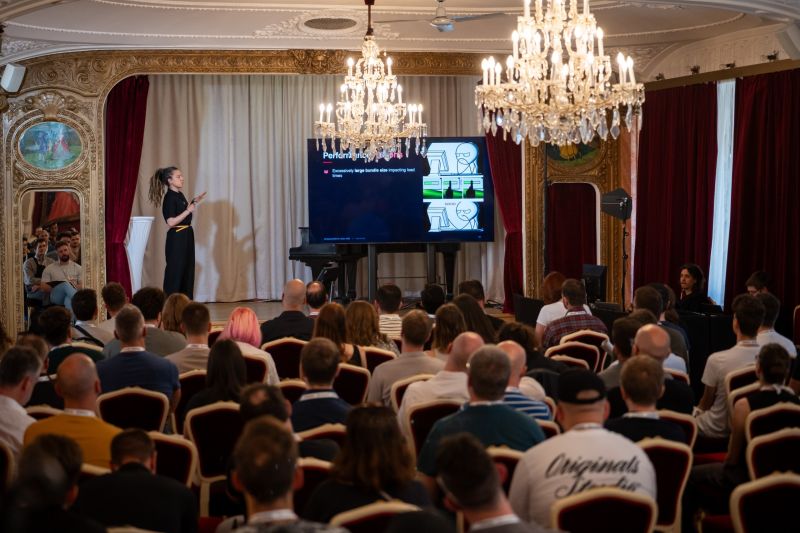
kate astrid on stage at WebExpo in Prague

A real story: Dropping MUI for clean CSS

WebExpo · Prague

Modern frontend teams often rely on powerful UI frameworks to move fast, but over time those tools can quietly become bottlenecks. This is the story of leaving MUI and rebuilding the component library with CSS and CSS Modules.

Video

Writing

Should We Delete All Our Unit Tests? I Asked, and the Thread Hit 201 Comments

A startup deleted all its unit tests, so I asked whether we would too. The 201 comments split into four camps.

Link

Five Questions Developers Bring to My Mentoring Sessions, and My Honest Answers

The five questions developers ask me most on ADPList, and how I answer them.

Link

Name That Bias: A Debugging Quiz in Six Scenes

Six scenes from a normal week in software, each with a cognitive bias to guess.

Link

Is Software Dead? Part Five: Accountability

Who carries the blame when an AI agent breaks production.

Link

We, Speakers, Broke AI Conferences

Why almost every AI talk promises orchestration, governance, or observability.

Link

Is Software Dead? Part Four: Developer Relations

Our docs have a second reader now, the AI agent, and what that means for DevRel.

Link

Is Software Dead? Part Three: Engineers

Writing code got cheap, and understanding it got expensive.

Link

Is Software Dead? Part Two: Users

People come to our software for a result, and every screen on the way costs them.

Link

Is Software Dead? Part One: Business

The $830 billion software selloff and what it means for the business of software.

Link

SpacetimeDB vs. Convex vs. Supabase: The Results from My Machine

A local messaging benchmark of three backends on an M1 Mac, from one message to a thousand.

Link

How "Almost Done" Became a Promise to My Team

What teammates hear when a feature is called almost done, and how AI can make that confidence arrive earlier.

Link

When AI Bias Becomes Our Bias

What happens to judgment when someone agrees with a model too quickly.

Link

Does AI Have Cognitive Biases Too?

Whether a model can already carry a bias before a person agrees with it.

Link

The Leftover Hard Parts

The work that remains after an AI produces a usable piece of code.

Link

The Wrong Question: Why Blameless Culture Builds Better Engineering Teams

After an incident, asking what happened instead of who caused it.

Link

How We Halved Our Playwright E2E Suite

Five changes that cut a slow, flaky Playwright suite roughly in half.

Link

From Chaos to Clarity: Fixing Our Monorepo

Moving one frontend from Craco, tsup, tsdx, and tsx onto Vite.

Link

What To Expect When You Join Epilot

A first-day letter for someone joining epilot.

Link

Have you heard about the anterior midcingulate cortex?

A short note on the part of the brain that chooses the harder task.

Link

Common Cognitive Biases That May Affect Us As Developers

Cognitive biases that show up in how developers estimate work.

Link

Ten Red Flags That Obstruct Systems Thinking

Ten habits that get in the way of seeing a system as a whole.

Link

How to Maintain the Performance of a React Application on a Daily Basis

Checks for keeping a React application's performance steady day to day.

Link

Podcasts

About

Before moving into software, I spent five years in cartography and geodesy, followed by five years as a fashion photographer. I also studied land-use planning and translation. These different paths have given me a lasting curiosity about how things fit together, how complex systems work, and how to make complicated ideas easier to understand.

Outside of work, I'm fascinated by cognitive science and quantum physics, and I'm still drawn to the intersection of technology, science, and art.

I mentor on ADPList. I work in English, speak Dutch at an intermediate level, and am eligible to work across the EU.

A few words from people I have worked with

Kate is an outstanding communicator and overall a really strong people person, and that trait also shone through in her product work. Kate really listens to feedback and course-corrects when presented with evidence, and at the same time knows when to stand her ground and debate topics that need more careful scrutiny.
Carlos Eduardo Coelho · LinkedIn
I was preparing for frontend developer job interviews with Kate. She explains difficult things in a simple way, pays attention to details, and always supports you during the preparation process.
Marina Sysoliatina · LinkedIn
Kate and I collaborated closely on a major, high-stakes project soon after I joined, where I witnessed her exceptional technical depth and reliability. From the moment I joined the team, she made me feel welcome and helped me to integrate properly.
Adeola Adeyemo · LinkedIn

From my mentoring sessions on ADPList

Kate is kind, honest and easy to talk to, while staying professional throughout. We worked through interview preparation for product engineering roles, and she shared her own views openly, which I found very helpful. I came away with a clearer picture of product engineering and I’m glad I got to speak with her.
Zoha Fard, Product Engineer · ADPList
Kate’s energy is contagious from the first second. She reminded me that every skill matters and pushed my motivation and self‑confidence to the top. We covered practical topics across UI/UX, accessibility, React/React Native, and portfolio strategy, with clear guidance on front-end vs. full‑stack expectations and how to show impact on GitHub and LinkedIn. Her advice is direct, actionable, and uplifting. Highly recommend Kate as a mentor.
Balzhan Kanatbek, Front-end Developer · ADPList

Photography

See all photos
Photo by kate astrid Photo by kate astrid Photo by kate astrid Photo by kate astrid Photo by kate astrid Photo by kate astrid Photo by kate astrid Photo by kate astrid Photo by kate astrid Photo by kate astrid Photo by kate astrid Photo by kate astrid Photo by kate astrid Photo by kate astrid Photo by kate astrid Photo by kate astrid Photo by kate astrid Photo by kate astrid Photo by kate astrid Photo by kate astrid Photo by kate astrid Photo by kate astrid Photo by kate astrid Photo by kate astrid Photo by kate astrid Photo by kate astrid Photo by kate astrid Photo by kate astrid Photo by kate astrid Photo by kate astrid Photo by kate astrid Photo by kate astrid Photo by kate astrid Photo by kate astrid Photo by kate astrid Photo by kate astrid Photo by kate astrid Photo by kate astrid Photo by kate astrid Photo by kate astrid Photo by kate astrid Photo by kate astrid Photo by kate astrid Photo by kate astrid Photo by kate astrid Photo by kate astrid Photo by kate astrid Photo by kate astrid Photo by kate astrid Photo by kate astrid Photo by kate astrid Photo by kate astrid Photo by kate astrid Photo by kate astrid Photo by kate astrid Photo by kate astrid Photo by kate astrid Photo by kate astrid Photo by kate astrid Photo by kate astrid Photo by kate astrid Photo by kate astrid Photo by kate astrid Photo by kate astrid Photo by kate astrid Photo by kate astrid Photo by kate astrid Photo by kate astrid Photo by kate astrid Photo by kate astrid Photo by kate astrid Photo by kate astrid

Invite me to speak, or come say hi.